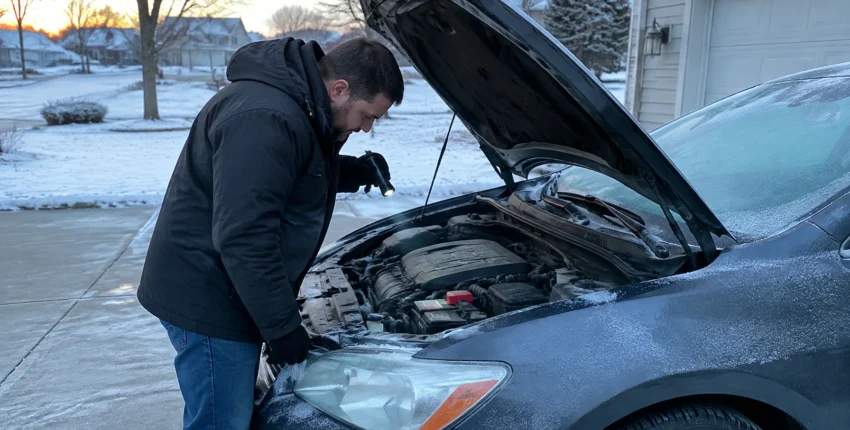
There are few worse ways to start a cold morning than turning the key and hearing nothing, or hearing a slow, reluctant crank that tells you the day may not go as planned.
Freezing temperatures in Illinois can expose problems that were already developing. A battery that seemed fine last week may not have enough power today. A loose terminal, thick engine oil, or key-fob issue can create the same frustrating result: a car that will not start.
Before arranging a tow, take a few minutes to work through these five checks in order. You may identify a simple issue, avoid unnecessary expense, and learn when the problem genuinely calls for professional diagnosis.
First, Listen to What the Car Does
Before checking under the hood, turn off the radio, heater, and other accessories. Then try starting the vehicle once and pay attention to what happens:
- Complete silence: The battery may be fully discharged, or a terminal, cable, or ignition connection may be loose.
- Rapid clicking: The battery may not have enough power to operate the starter, or the battery connections may be restricting current.
- One heavy click: A weak battery is possible, but the starter or starter relay may also be involved.
- Slow, labored cranking: The battery may be weak, the connections may be poor, or thick oil may be making the engine harder to turn.
- Normal cranking without the engine starting: The issue may involve fuel, spark, sensors, or the vehicle’s security system rather than the battery.
Do not keep trying repeatedly. Excessive cranking can drain the battery further and turn a manageable problem into a more expensive one.
Check 1: Test the Battery and Charging System
The battery is the most common place to start, especially when a vehicle fails on a freezing morning. Cold temperatures reduce the amount of power a battery can deliver, while cold, thickened oil increases the power needed to crank the engine.
A weak battery may still turn on the headlights, dashboard, and radio but lack enough cold-cranking power to start the engine. A dead battery may produce very dim lights, flickering electronics, or no response at all. If the remote locks and unlocks also stopped working, that can point toward a discharged vehicle battery, although a dead key-fob battery can cause similar remote-locking symptoms.
If you have a multimeter, a fully charged 12-volt battery will often measure near 12.6 volts after the vehicle has been sitting. A lower reading suggests the battery may be undercharged or weak, but voltage alone cannot confirm whether it can deliver enough starting power. A proper battery and charging-system test is more reliable.
A vehicle that starts with a jump but repeatedly fails later may have:
- A battery that no longer holds a charge
- An alternator that is not recharging the battery
- A parasitic electrical drain
- A poor battery or ground connection
Testing the system now can save you from buying a battery when the actual problem is the alternator, or paying for repeated jump-starts when the battery is ready for replacement.
For related maintenance, see our guide to the importance of regular oil changes in Elgin, IL. Regular maintenance helps reduce cold-weather strain and catch developing problems earlier.
Check 2: Inspect the Battery Terminals and Connections
A battery can have sufficient charge and still fail to start the car if electricity cannot move through the connections properly.
With the ignition and accessories switched off, look at both battery terminals. Watch for:
- White, blue, or green corrosion
- Loose clamps that can be twisted by hand
- Frayed or damaged cables
- A loose ground connection
- A swollen, cracked, leaking, or badly damaged battery case
Corrosion acts like a barrier between the battery posts and cable clamps. It can cause slow cranking, clicking, dim lights, or complete silence. Symptoms that can look exactly like a dead battery.
If the battery is intact and the corrosion is minor, cleaning the terminals may help. Wear gloves and eye protection, keep sparks away from the battery, and follow the vehicle owner’s manual. Do not attempt to clean or jump a battery that is cracked, leaking, bulging, or potentially frozen. A damaged battery needs professional attention.
This simple inspection can save the cost of a tow or unnecessary parts. However, if the clamps are tight and clean but the vehicle still will not start, the battery, starter, cables, or charging system may need testing by certified auto mechanics in Elgin.
Check 3: Decide Whether It Is a Fuel or Spark Problem
If the engine cranks at a normal speed but never starts, the battery may not be the main problem. The engine is turning, but it may not be receiving the fuel, ignition spark, or sensor signal needed to run.
Think about what changed before the no-start:
- Is there fuel in the tank?
- Did the vehicle run poorly or hesitate recently?
- Is the check engine light on?
- Can you hear a brief fuel-pump sound when switching the ignition on?
- Is the security or immobilizer light flashing?
- Did the problem begin after filling up or during especially cold weather?
A normal crank with no start can be caused by a fuel-pump problem, ignition fault, failed sensor, or another engine-management issue. A jump-start usually will not correct those problems.
Avoid repeatedly cranking the engine in the hope that it will eventually catch. If the engine is not starting after a few brief attempts, stop and arrange a diagnosis. Continuing can overheat the starter and discharge the battery, creating a second problem alongside the original one.
This is one situation where choosing reliable vehicle repair near me is more practical than guessing at parts. A proper diagnostic test can identify the cause before you spend money on components you do not need.
Check 4: Try the Key, Key Fob, and Immobilizer Backup
Modern vehicles may refuse to start because the car does not recognize the key, not because the engine or battery has failed.
A weak key-fob battery may cause:
- “Key not detected” messages
- Remote buttons that stop working
- Difficulty unlocking the vehicle
- A push-button start system that does not respond
The procedure for a weak key fob varies by vehicle. Some models require you to hold the fob directly against the START button. Others have a designated backup pocket or slot. Check your owner’s manual for the correct location and method. If available, try the spare programmed key.
A key-fob battery problem usually does not cause a slow crank. If the starter turns slowly, inspect the vehicle’s 12-volt battery and cable connections as well.
If the engine cranks normally but will not run while the security or immobilizer light stays on or flashes, do not assume a jump-start will bypass the system. The vehicle may need a recognized key, a reset procedure, or professional diagnosis.
Knowing this distinction can save you from paying for a tow based on the wrong assumption, or from replacing a good vehicle battery when the issue is actually key recognition.
Check 5: Consider Oil Viscosity and a Block Heater
When temperatures drop, engine oil becomes thicker. That makes it harder for the starter to turn the engine, particularly if the wrong oil viscosity is installed or the oil is overdue for service.
Use only the oil grade and specification listed on the oil cap or in the owner’s manual. Do not switch to a heavier or lighter oil based on guesswork. The correct viscosity is selected for the engine’s design and expected temperature range.
If your vehicle is equipped with an engine block heater, use it according to the manufacturer’s instructions. A block heater warms the engine before startup and can reduce the effort required from the battery and starter. Use a properly grounded, outdoor-rated connection and a timer if recommended. Never use damaged cords or leave electrical equipment in standing water.
Cold-start trouble is a good reminder that affordable car maintenance is often preventative rather than reactive. The right oil, a healthy battery, clean terminals, and regular inspections can cost far less than a tow, missed work, or a failed starter.

If You Need a Jump-Start
Only attempt a jump-start if you are in a safe location and the battery is not cracked, leaking, swollen, or frozen. Read your owner’s manual first, especially if you drive a hybrid, electric vehicle, or a model with remote battery terminals.
For a conventional 12-volt vehicle:
- Park the donor vehicle close enough for the cables to reach, but do not let the vehicles touch.
- Put both vehicles in Park or Neutral, set the parking brakes, and switch off both ignitions and accessories.
- Connect the red clamp to the disabled vehicle’s positive terminal.
- Connect the other red clamp to the donor battery’s positive terminal.
- Connect the black clamp to the donor battery’s negative terminal.
- Connect the final black clamp to a solid, unpainted metal ground on the disabled vehicle, away from the battery.
- Start the donor vehicle and wait a few minutes before trying the disabled vehicle.
- Try starting the disabled vehicle briefly. If it still cranks slowly, stop rather than repeatedly grinding the starter.
- Remove the cables in reverse order once the vehicle starts.
Keep the clamps away from belts, fans, and other moving parts. Incorrect connections can cause sparks, battery damage, or expensive electronic problems.
Never run a vehicle in a closed garage, even if the garage door is open. Carbon monoxide can build up quickly and is impossible to see or smell. If you are stranded, move away from traffic when possible, stay warm and visible, and call roadside assistance or a trusted repair shop. If the vehicle starts but stalls again, or if it will only start with a jump, have the battery and charging system tested promptly.
When to Call for Professional Diagnosis
Some no-start problems genuinely require equipment and experience. Call for help when:
- The battery is damaged or appears frozen
- The vehicle will not start after a safe jump attempt
- The engine cranks normally but will not fire
- The security or immobilizer light remains active
- The car starts and then dies again
- You hear grinding, repeated heavy clicking, or unusual electrical sounds
- You are not comfortable working around a battery
Mundo Auto Repair provides auto repair in Elgin, IL, with certified technicians, upfront communication, and recommendations based on what your vehicle actually needs. If a cold morning exposes a battery, starting, or charging problem, contact Mundo Auto Repair to schedule a diagnostic appointment.
A few careful checks may get you moving without a tow. And when the problem is beyond a driveway inspection, an accurate diagnosis can prevent unnecessary repairs and help keep your next Illinois winter morning on schedule.