
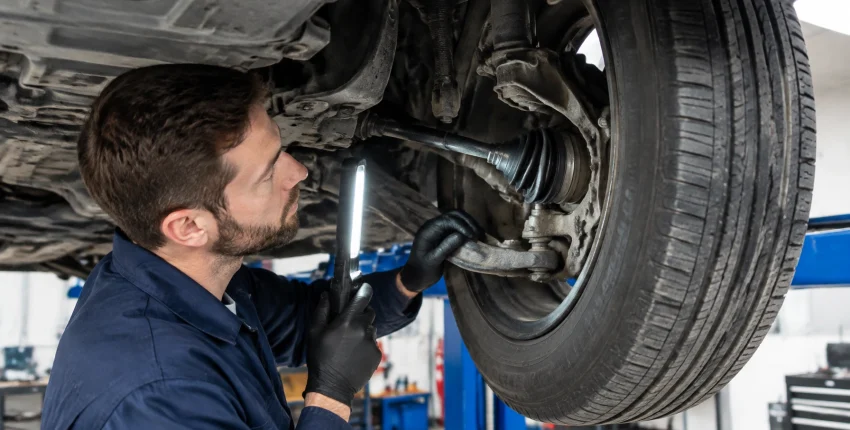
A steering wheel that starts shaking can make an ordinary drive feel unsettling. In Elgin, potholes and winter freeze-thaw cycles can be tough on tires, wheels, brakes, and suspension parts. But the timing of the vibration often offers an important clue: does it happen at a certain speed, when you brake, while the car is stopped, or only when turning?
Those patterns don’t confirm a diagnosis on their own, but they can help narrow down what needs attention. Here’s what to notice, and why it’s worth addressing a new shake before it wears other parts or affects control.
First, notice when the shaking happens
Pay attention to the conditions, rather than trying to diagnose the car yourself. Does the vibration begin at a particular road speed? Does it go away when you ease off the brake? Can you feel it while stopped at a light? Does it come with a clunk, a pull to one side, or a warning light?
Also notice where you feel it. A shake through the steering wheel may point toward a front wheel, tire, brake, or steering component. A vibration felt more through the seat or floor may have a different source. These clues help a technician reproduce the concern and inspect the right systems.
If the shake comes on at certain speeds
A vibration that appears as you reach a certain speed, and may fade or change as you go faster, is often related to a tire or wheel. A tire and wheel can be slightly out of balance, meaning their weight isn’t distributed evenly as they spin. That small imbalance can become noticeable through the steering wheel at road speed.
Other possibilities include a tire with uneven wear, a damaged or bent wheel, or a tire that has changed shape. Pothole impacts can contribute to wheel or tire damage, so look for a new bulge, cut, or unusual tread wear, but don’t crawl under a vehicle or handle a damaged tire if you’re unsure it’s safe.
Worn suspension or steering parts, including tie rods or ball joints, can also allow a wheel to move more than it should. A tie rod connects steering components to the wheel; a ball joint acts like a pivot. If either becomes loose, the car may feel less steady or develop clunks and uneven tire wear along with the vibration. A thorough suspension and brake repair inspection can help distinguish those issues from a simple balance concern.
If the shake appears or worsens when braking
When the steering wheel shakes mainly as you press the brake pedal, the brake system deserves attention. One common cause is uneven rotor surfaces. Rotors are the discs the brake pads press against to slow your wheels. Drivers often call this a “warped rotor,” but uneven thickness or deposits of brake-pad material can also create an uneven braking feel.
A sticking caliper, the part that presses the pads against the rotor, may cause one brake to drag or wear differently from the others. You might also notice a pull, unusual heat near a wheel, or uneven pad wear. A brake pedal that pulses along with steering-wheel shake is another useful detail to share when arranging an inspection.
Don’t assume that replacing one part will automatically solve it. A technician may need to inspect the pads, rotors, calipers, and related components together to find the cause and help prevent the vibration from returning.

If the car shakes while stopped at idle
A vibration you can feel while the vehicle is stationary points away from a wheel-speed problem. Worn engine or transmission mounts are one possibility. Mounts hold these components in place and help reduce the vibration they naturally produce. If a mount is worn or damaged, more of that movement can be felt in the cabin, sometimes more strongly when the car is in Drive than when it’s in Park.
An uneven idle is another possibility. A misfire, when a cylinder doesn’t fire properly, or another engine-running issue can make the vehicle shake at a stop. A warning light, rough engine sound, or change in how the car responds can help narrow down what to check.
A worn CV joint may cause clicking or popping when the vehicle turns, and can sometimes produce vibration while accelerating. But if the car shakes while fully stopped, a CV joint is less likely to be the cause of that idle vibration.
Why it’s better not to wait
Vibration can be a sign that one part is putting extra stress on others. An unbalanced wheel or damaged tire can contribute to irregular wear, sometimes called cupping, where the tread develops uneven dips. Loose steering or suspension parts can make the vehicle harder to control and may worsen tire wear.
Brake problems can also affect other components. Uneven braking can wear pads and rotors unevenly, while a dragging brake may build up excess heat. Catching the cause early can help avoid added wear and reduce the chance of a small concern becoming a larger repair.
If the shaking began after hitting a pothole, or if it comes with pulling, clunking, grinding, steering looseness, or a brake warning light, arrange an inspection promptly. Severe vibration, smoke, or a hot smell near a wheel calls for stopping somewhere safe and getting professional guidance rather than continuing the trip.
Get the cause checked before it gets worse
A shake that appears at a certain speed, only while braking, or at idle can point toward different systems. Those patterns are helpful clues, but a proper diagnosis may involve checking tires and wheels, brakes, steering, suspension, and engine mounts.
Mundo Auto Repair provides brake and suspension repair in Elgin, IL. If your steering wheel has started shaking, contact Mundo Auto Repair to schedule an inspection. A timely check can help you understand what’s happening and keep a small vibration from turning into a bigger problem.